
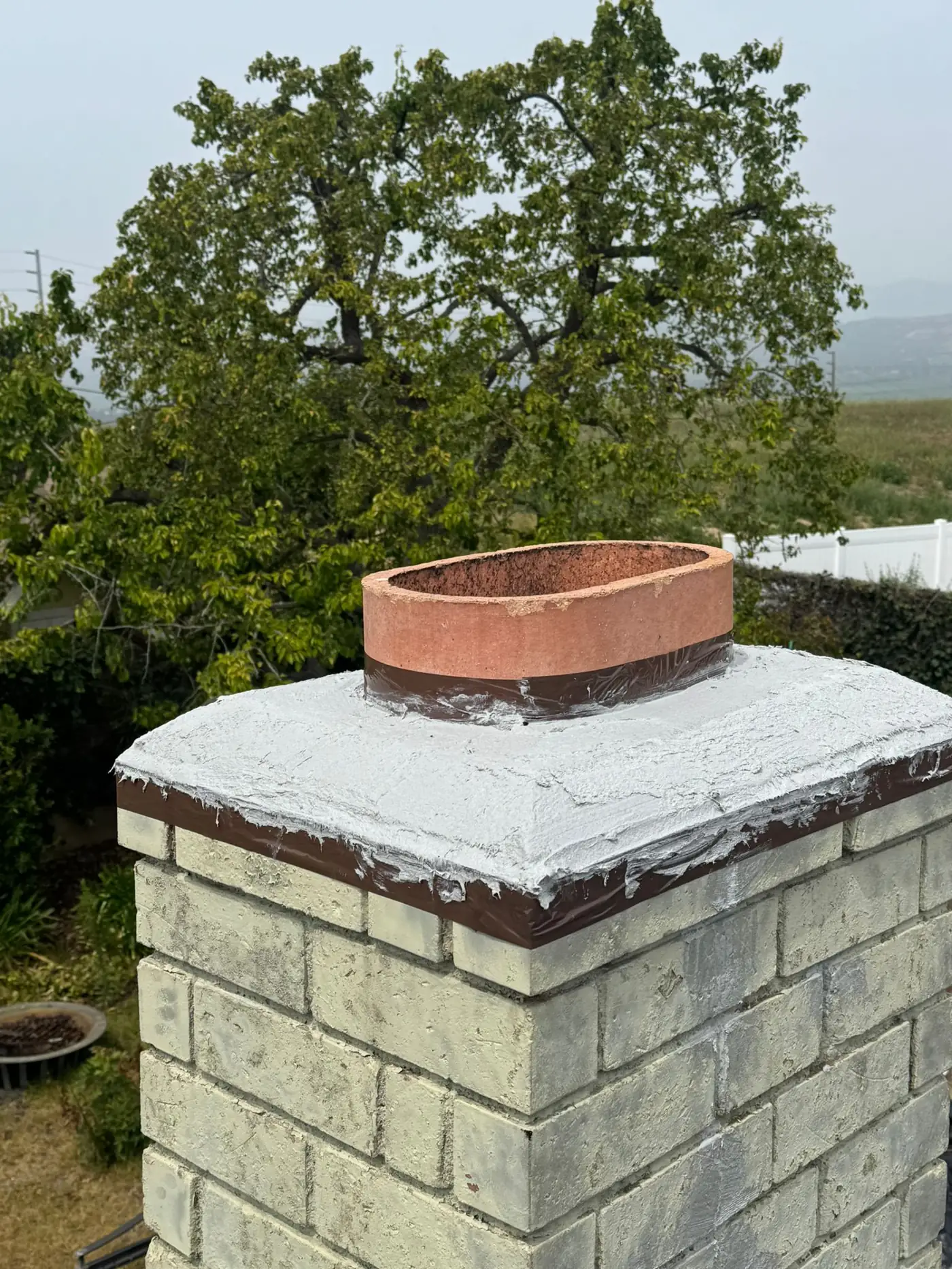
Fireplace Repair
Firebox, damper, and smoke chamber repair for wood-burning and prefab fireplaces — from cracked firebrick and refractory mortar to a damper that won't seal to a rough, unparged smoke chamber choking your draft. Free written estimate before any work begins.
- Typical cost rangeFrom $150
- Damper repair avg.~$360
- Components coveredFirebox, Damper, Smoke Chamber
- StandardNFPA 211 / CSIA
What Fireplace Repair Involves
"Fireplace repair" isn't one job — it's three distinct components, each with its own materials, failure modes, and repair methods. The firebox is where the fire physically burns. The damper is the mechanism that lets smoke exit while burning and seals the flue shut when the fireplace is idle. The smoke chamber is the transitional space above the damper that funnels combustion gases from the wide firebox opening into the narrower flue. A technician who treats all three the same way — or who only looks at the one that's easiest to see — is the most common reason a "repaired" fireplace develops the same problem again within a season or two.
Every fireplace repair visit starts with identifying which component (or components) is actually failing, since the symptoms often overlap. Smoke rolling into the room, for example, can trace back to a damper that won't open fully, a smoke chamber with rough turbulence-causing brickwork, or in rarer cases a firebox that's drawing air incorrectly. We diagnose before we quote, and every estimate spells out exactly which component is being repaired and why.
The Firebox
The firebox is the masonry, metal, or refractory-panel compartment that holds the fire directly. On a traditional masonry fireplace, it's lined with firebrick set in high-temperature refractory mortar — not the standard Type N or Type S mortar used elsewhere on the chimney, which breaks down under direct flame-adjacent heat. Repair starts with inspecting every firebrick and every mortar joint for cracking or spalling; where possible, we replace individual damaged bricks rather than rebuilding the whole firebox, which keeps the repair proportional to the actual damage. We also check the firebox floor and back wall for structural integrity, since a compromised back wall can put heat directly against framing on the other side.
Prefabricated, zero-clearance metal fireboxes are a different animal entirely. They use manufacturer-specific metal or ceramic refractory panels rather than masonry, and they generally aren't field-repairable with mortar and firebrick — the panels have to be sourced to match the exact make and model. Warning signs on a metal firebox include discoloration, warping, or visible gaps where the panel has pulled away from the frame, any of which can expose combustible framing to direct heat and needs prompt attention.
The Damper
The damper is the metal plate or mechanism that opens to let smoke draw up the flue while a fire is burning, and closes to block the flue and stop conditioned air from escaping (or rain and animals from entering) when the fireplace is idle. A traditional throat damper is a cast-iron plate positioned at the top of the firebox, operated by a lever or rotary handle. Over years of heat cycling, that plate can rust, warp, or bind — when that happens, we first try repairing and lubricating the existing mechanism, since that's the cheaper fix, but a plate that's warped or rusted through needs a full assembly replacement.
We increasingly recommend upgrading an aging throat damper to a top-mount damper — a stainless steel damper installed at the very top of the flue, integrated with the chimney cap, rather than down at the throat. A top-mount unit seals far more effectively against both energy loss and rain intrusion than an old throat damper, and it's a natural pairing with a new cap. If that's a direction you want to explore, our cap installation page covers the combined upgrade in more detail.
The Smoke Chamber
The smoke chamber is the funnel-shaped transition between the firebox/damper and the flue, and it's the hardest component to access — inspecting it properly usually requires a Level 2 camera, since it sits above the damper and out of direct sightline. On many older or budget-built chimneys, the smoke chamber's corbelled brick steps were left rough and unparged during original construction. That's a genuine construction defect: rough brickwork creates turbulence that hurts draft, gives creosote extra surface area to collect on, and can leave hidden gaps between the masonry and the space itself.
The fix is smoke chamber parging — a high-temperature insulating cementitious coating troweled or sprayed over the interior to smooth out the rough steps, seal small cracks, and eliminate the gaps that let heat reach nearby masonry or framing. It's a more involved repair than firebox or damper work purely because of access, but it's also one of the more permanent fixes on this list: properly applied parging generally lasts the life of the chimney absent a fire or structural event.
Firebox vs. Smoke Chamber: Not the Same Repair
These two get confused constantly because they're both masonry surfaces near the fire, but they fail for different reasons and need different fixes. It's worth knowing the distinction before you call around for quotes:
Direct flame contact. Fails as cracked firebrick and crumbling refractory mortar. Repaired with firebrick replacement and high-temp refractory mortar joints.
Above the damper, out of direct flame. Fails as rough, unparged corbelled brick causing turbulence and creosote collection. Repaired with insulating refractory parging.
Standards We Follow
NFPA 211 sets the governing standards for all three components: required firebox dimensions and clearances to combustibles, damper function requirements (a damper must be operable and provide effective closure, not just be present), and smoke chamber construction and clearance standards. The Chimney Safety Institute of America specifically calls out unparged, rough smoke chambers as a common and under-recognized fire-safety defect — precisely because the gaps it creates are hidden from view, making it one of the more dangerous heat-transfer risks in the entire chimney system even though it rarely gets a homeowner's attention the way a cracked crown or a leaning stack does.
Every fireplace repair we perform is checked against these standards, not just against "does it look fixed." A firebox repaired with the wrong mortar might look identical to one repaired correctly — the difference only shows up after the next few burn cycles, which is exactly why using refractory-rated materials the first time matters.
Signs You Need Fireplace Repair
- • Smoke entering the room instead of drawing up the flue
- • Visible cracks in firebrick or crumbling/missing mortar between bricks
- • A damper that's stuck, rusted, warped, or won't seal fully closed or open
- • Discoloration or warping on a metal/prefab firebox surface
- • Persistent creosote buildup despite regular sweeping — often traced to smoke chamber turbulence
- • Unusual heat felt on the wall or framing near the chimney chase during a fire — stop use immediately and get this inspected, as it can signal inadequate clearance
- • Drafts felt at the fireplace opening even when the damper is supposedly closed
Why SoCal Homeowners Get Caught Off Guard
Southern California's mild climate means many homeowners only use their fireplace occasionally — the holidays, the handful of genuinely cold nights, or a Santa Ana wind cold snap. That infrequent use is sometimes mistaken for a reason to skip inspection altogether, but a damper or firebox issue can develop silently over months of non-use: a mortar joint that's been slowly failing, a damper mechanism that's seized from disuse rather than heat. These problems are typically discovered at the exact wrong moment — the first fire of the season, when a family gathers around expecting a normal evening and instead gets a room full of smoke or, worse, doesn't notice a real safety issue until it's already burning.
Fireplace Repair Cost in Temecula
Firebox repair typically runs $150–$1,000, rising to around $2,500 for a full firebox replacement in severe cases. Damper repair or replacement runs $120–$700, averaging around $360 once parts and labor are combined. Smoke chamber repair and parging runs $500–$2,000, priced higher on average because of the difficult access. Across all three components, fireplace repair overall spans roughly $95–$2,800, with gas fireplace components generally costing more to repair than wood-burning masonry components, and electric units the least. What moves the price most is which component is involved, how extensive the damage is, and — for the firebox specifically — whether it's masonry (repairable with firebrick and mortar) or prefab metal (requiring costlier manufacturer-specific parts).
For a full breakdown of every chimney and fireplace service and what drives price up or down, see our complete chimney service cost guide.
How Often Each Component Needs Attention
All three components get checked at every annual Level 1 inspection, but they age at different rates. Firebrick and refractory mortar in a heavy-use fireplace may need spot repair every 5 to 10 years, simply from repeated thermal cycling. Damper mechanisms are more durable — they typically last 15 to 20-plus years — but should still be function-tested annually, since a damper that's stuck open is quietly costing you on energy bills every month it goes unnoticed. Smoke chamber parging, once properly applied, generally lasts the life of the chimney barring fire or structural damage, which is why getting it done correctly the first time is worth the extra labor cost of accessing that space.
Not Sure Which Component Is the Problem?
Smoke chamber issues are especially hard to self-diagnose since the space is barely visible without a camera. A Level 2 camera inspection is usually the fastest way to pinpoint exactly which component needs work before you pay for a repair you don't actually need — call us and we'll walk you through it, free.
Frequently Asked Questions
What's the difference between the firebox and the smoke chamber?+
The firebox is the compartment at the bottom where the fire burns, lined with firebrick and refractory mortar. The smoke chamber sits above the damper and funnels gases into the flue. They fail differently — cracked firebrick versus rough, unparged brick steps — and need different repairs.
Can I use regular mortar to repair firebrick?+
No. Firebox joints need high-temperature refractory mortar rated for 2,000°F or more. Standard Type N or Type S mortar breaks down under direct flame heat and will crack and fail again quickly.
Why won't my damper close all the way?+
Usually rust, warping from heat cycling, or a bent mechanism. Cast-iron throat dampers can often be repaired and lubricated, but a warped or rusted-through plate needs replacement — sometimes as an upgrade to a top-mount damper for a tighter seal.
What is smoke chamber parging and why does it matter?+
A high-temperature insulating coating troweled or sprayed over rough, corbelled brick steps inside the smoke chamber. Unparged chambers create turbulence, collect creosote, and can leave dangerous voids near framing — CSIA flags this as an under-recognized fire-safety defect.
How do I know if I need firebox, damper, or smoke chamber repair?+
Cracked firebrick points to the firebox. A damper that won't latch or seal points to the damper. Smoke spilling into the room or heavy creosote near the firebox top points to the smoke chamber. A Level 2 camera inspection can pinpoint it when it isn't obvious.
How much does fireplace repair cost in Temecula?+
Typically $150–$2,500 depending on the component. Firebox repair runs $150–$1,000, damper repair or replacement averages around $360, and smoke chamber repair runs $500–$2,000. See our cost guide for the full breakdown.
Related Services
Ready to Repair Your Fireplace?
Free written estimates for Temecula, Murrieta, Menifee, Wildomar, Winchester, French Valley and Orange County.