
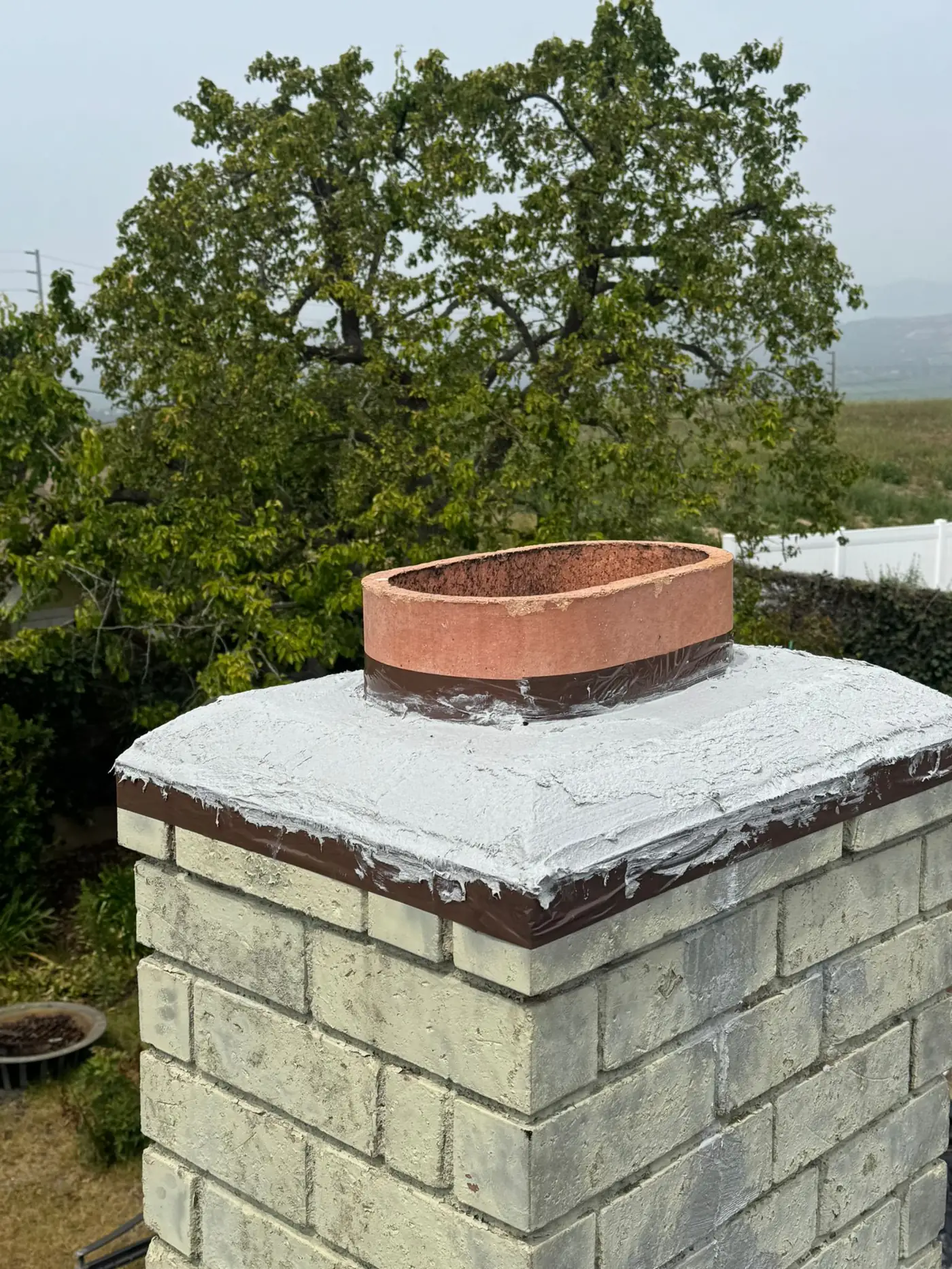
Chimney Repair
Structural and functional chimney repair — from a handful of cracked bricks to a leaning stack — diagnosed at the water-intrusion source first, so the fix actually holds instead of failing again next season.
- Typical costFrom $160
- Rebuild thresholdFrom $3,000
- First stepDiagnostic inspection
- StandardNFPA 211 / CBC
What Chimney Repair Involves
"Chimney repair" is an umbrella category for functional and structural fixes that fall short of a full rebuild: replacing a handful of cracked or spalled bricks (not a full section), repairing or replacing flashing at the roofline, fixing a deteriorated smoke shelf, correcting the firebox-to-flue transition, repairing a sticking or corroded damper mechanism, and re-securing a chimney that's begun leaning or separating from the house. If your issue is specifically the crown, cap, liner, or a full masonry section, those get their own dedicated repair scope — we'll point you to the right page below rather than lump every job into one generic bucket.
Every repair starts with a diagnostic inspection — usually a Level 1 or Level 2 per NFPA 211 — to find the root cause before we touch anything cosmetic. This is the single most important step in the entire process, and it's the one corners get cut on most often in this industry. Repairing symptoms, like patching a few cracked bricks, without fixing the water-intrusion source behind them — almost always a failed crown, gapped flashing, or missing cap — is the number one contractor mistake we see on second-opinion calls. Water keeps entering through the original failure point, and the new patch fails again within a season, sometimes faster.
Once the water source is identified and addressed, we move to the cosmetic and structural masonry repair: replacing defective components with matched materials — mortar type, brick color and texture, flashing metal — so the repair blends in rather than standing out as an obvious patch job. We photo-document every completed repair, both for your records and so we have a clear before/after reference if anything related comes up down the line.
Fixing the Symptom vs. Fixing the Cause
Nearly every masonry repair traces back to water entering through a failed crown, gapped flashing, or a missing/damaged cap. Skip this step and the repair is temporary.
Re-flash, reseal the crown, or replace the cap before doing any cosmetic brick work. This stops new water from reaching the repaired area.
Only now does brick replacement, mortar repair, or damper service happen — with matched materials so the fix holds and blends in.
Standards We Follow
NFPA 211 governs the safety-critical elements of any chimney repair — required clearances to combustibles, liner integrity, and proper connection points — regardless of whether the job is a small brick patch or a larger structural fix. For repairs that touch the house's structural connection or require permitting, the California Building Code, which incorporates International Building Code seismic provisions, sets the bar for how the work has to be engineered and inspected.
We use materials matched to the original build: Type N or Type S mortar depending on whether the joint is general-purpose or load-bearing, brick matched by color, size, and texture rather than whatever's on the truck, sheet-metal flashing in aluminum, copper, or galvanized steel depending on the application, and high-temperature furnace cement or refractory mortar for anything near the firebox itself, where ordinary mortar would crack under heat cycling.
Signs You Need a Chimney Repair
- • Spalling brick — flaking or popping brick faces caused by moisture cycling through the material
- • White, powdery efflorescence staining on the exterior masonry
- • Visible gaps or daylight at the flashing line where the chimney meets the roof
- • Rust streaks on the firebox or damper, meaning water is already reaching metal components
- • A leaning or visibly separated chimney stack — this is an urgent safety hazard requiring immediate Level 2 or Level 3 inspection
- • A cracked or visibly shifted crown, or a persistent smoke smell without a fire burning
Why SoCal Chimneys Fail the Way They Do
Southern California's wet-winter, dry-summer moisture cycle is harder on masonry than most homeowners expect. Brick and mortar absorb whatever rain falls during the winter months, then dry out fast under the region's intense summer heat — that repeated expansion and contraction is exactly what drives spalling brick faces and hairline mortar cracking over the years, even without any single dramatic weather event to point to.
Riverside County and Orange County also sit within active seismic zones tied to the San Jacinto, Elsinore, and broader San Andreas fault systems. Older, unreinforced masonry chimneys — common in homes built before modern seismic bracing became standard, roughly pre-1990s — are among the most seismically vulnerable parts of a house, since they're tall, heavy, and rigid compared to the lighter wood-frame structure holding them up. A chimney-to-roofline gap that's widened, or a stack that's begun leaning slightly, is a common post-seismic finding that shouldn't wait for the next scheduled inspection to get addressed.
Common Repair Scenarios We See in Temecula Homes
Leaning or separating stacks. A chimney that's begun to lean away from the house, or where a visible gap has opened between the chimney and the exterior wall, is one of the more urgent calls we take. This isn't a cosmetic issue — it usually means the footing has shifted, the ties anchoring the chimney to the structure have corroded or failed, or seismic movement has loosened the connection. We always pair this kind of repair with a Level 2 or Level 3 inspection first, since stabilizing a leaning chimney without understanding why it's moving is a recipe for the same problem returning.
Damper and smoke shelf issues. A damper that won't fully close wastes conditioned air year-round, while one that won't fully open restricts draft and pushes smoke back into the room. Corrosion from long-term water exposure is the usual culprit, and it's often discovered during a smoke shelf repair, since debris and rust tend to accumulate in the same low point of the firebox. We clean, repair, or replace the mechanism as needed and check the shelf for cracking that could be letting smoke escape into the wall cavity.
Flashing failures. Flashing is the thin metal barrier where the chimney meets the roofline, and it's one of the single most common points of water entry on any chimney, masonry or prefab. Roofing work done without properly re-sealing the flashing, age-related metal fatigue, and even squirrel or bird activity that lifts a flashing edge can all open a path for water. Because flashing failures are often the hidden cause behind a "mystery" masonry repair that keeps recurring, we check it first on almost every repair call, even when the visible complaint is somewhere else entirely.
Permits and Structural Repairs
Most cosmetic and functional repairs — brick replacement, flashing, damper service — don't require a permit. Repairs that touch the structural connection between the chimney and the house, or that involve significant rebuilding of the stack above the roofline, typically do fall under California Building Code permitting requirements, especially where seismic bracing or anchoring is part of the scope. We'll tell you upfront if your repair crosses that line, and we handle the permitting process directly so you're not left navigating city requirements on your own.
The Cost of Waiting
Deferred chimney repair is one of the more expensive mistakes a homeowner can make on a house. A crown repair that costs around $300 when caught early can turn into a $3,000-plus rebuild within a few years if the same water source keeps entering unaddressed, progressively damaging surrounding masonry, corroding metal components, and eventually reaching interior framing. We'll always tell you honestly when something is a genuine emergency versus something that can reasonably wait a season, but we won't tell you a real problem is cosmetic just to avoid an uncomfortable conversation.
The same logic applies to interior damage. Once water has tracked past the masonry and reached the framing around a chimney chase, the repair scope jumps considerably — now it's not just brick and mortar, it's drywall, insulation, and potentially structural framing members that need to be opened up, dried out, and repaired. Catching a failure at the crown or flashing stage, before it ever reaches that point, is almost always the cheaper and less disruptive path, which is part of why we push for an annual Level 1 inspection even on chimneys that seem to be holding up fine.
Not Sure If It's a Repair or a Full Rebuild?
If cumulative repair estimates are climbing past $3,000–$4,000, a full chimney rebuild often becomes the smarter long-term option. If the issue is isolated to loose or cracked brick sections, our masonry repair service may be all you need. We'll give you both numbers side by side, no pressure either way.
Chimney Repair Cost in Temecula
Chimney repair typically runs $160–$3,500 depending on scope. The repair-versus-rebuild decision point usually emerges once cumulative repair estimates climb toward $3,000–$4,000 — past that line, a full rebuild often makes more financial sense than continuing to patch an aging structure. Price drivers include chimney height, whether it's traditional masonry or a prefabricated metal chimney, roof pitch and accessibility (steep tile roofs common across Temecula and Orange County add scaffolding time), and whether water damage has already reached interior framing rather than staying contained to the exterior masonry.
For a full breakdown of every chimney service and what drives price up or down, see our complete chimney service cost guide.
Frequently Asked Questions
What's included under general chimney repair?+
Structural and functional fixes short of a full rebuild — a few cracked or spalled bricks, flashing repair, smoke shelf repair, firebox-to-flue transition, damper repair, and re-securing a leaning chimney. Crown, cap, liner, or full masonry sections have their own dedicated repair pages.
Why does a chimney repair sometimes fail again within a year?+
Patching a symptom without fixing the water-intrusion source — usually a failed crown, flashing, or cap — is the top contractor mistake. Water keeps entering through the original source, and the patch fails again within a season.
What are the warning signs I need a chimney repair?+
Spalling brick, white efflorescence staining, gaps at the flashing line, rust streaks on the firebox or damper, a leaning or separated stack, a cracked crown, or smoke smell without a fire.
How much does chimney repair cost in Temecula?+
Typically $160–$3,500 depending on scope, height, roof pitch, and whether water damage reached interior framing. See our cost guide for a full breakdown.
Should I repair or rebuild my chimney?+
Once cumulative repair estimates climb toward $3,000–$4,000, a full rebuild often becomes the more cost-effective option. We give you both numbers so you can decide with real information.
What happens if I keep delaying a small chimney repair?+
Deferred repairs compound — a roughly $300 crown repair can become a $3,000-plus rebuild within a few years if water keeps entering through the same failure point.
Related Services
Ready to Get Your Chimney Repaired?
Free written estimates for Temecula, Murrieta, Menifee, Wildomar, Winchester, French Valley and Orange County.