
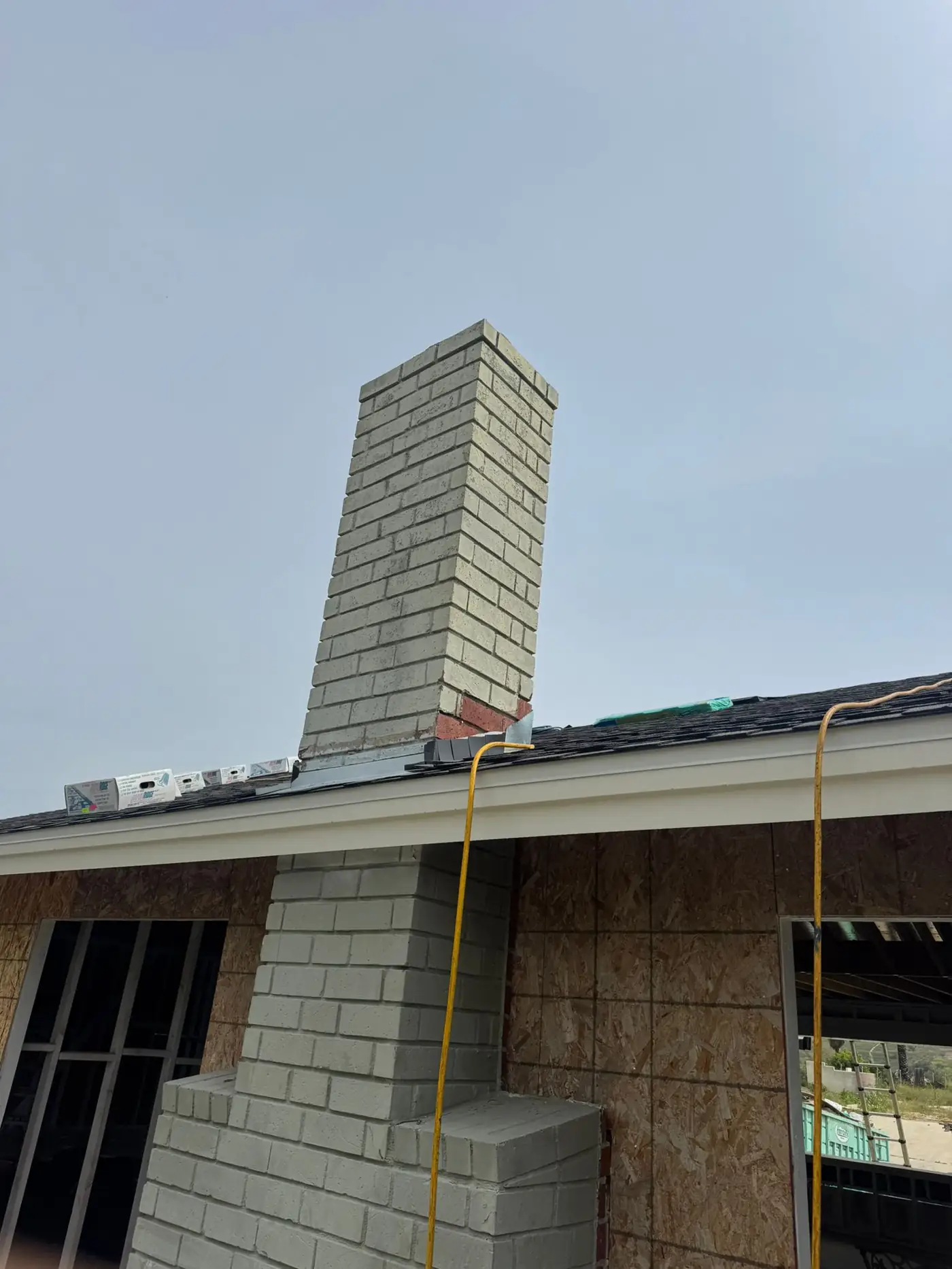
Chimney Crown Repair & Rebuild
The crown is the most water-exposed part of your entire chimney — a cracked or poorly built one is one of the top causes of water damage CSIA identifies. We repair hairline cracks with flexible crown coat, or fully rebuild with proper overhang, drip edge, bond break and slope when the concrete itself has failed.
- Minor crack repairFrom $150
- Full rebuildFrom $1,800
- Lifespan when built right20–25+ years
- StandardCSIA / BIA best practice
Crown vs. Cap: What's Actually Up There
Homeowners mix these two up constantly, so it's worth being precise. The crown is the concrete or mortar wash — the flat or slightly sloped slab covering the very top of the masonry structure. It seals the gap between the outer brick and the flue liner (or liners, on a multi-flue chimney) and is responsible for shedding water away from the masonry entirely. The cap is a separate component: a metal cover, usually with mesh screening, that sits directly on the flue opening to keep out rain, animals, and debris. This page covers the crown; if it's the metal cap itself that's missing, rusted, or damaged, see our cap installation page instead.
Because it sits at the very highest point of the structure, exposed directly to sun, rain, and freeze-thaw cycling, the crown is the single most water-exposed component of the whole chimney system. CSIA calls crown failure one of the top sources of chimney water damage — and in our experience inspecting chimneys across Temecula and Orange County, a significant share of the water intrusion we trace back to its source starts at a cracked, undersized, or improperly built crown.
What a Properly Built Crown Requires
Minimum 2-inch overhang past the brick face on all sides, with a kerf-cut drip edge on the underside, so water drips off away from the brick instead of running back underneath and down the masonry face. A crown flush with the brick with no overhang is the single most common construction defect we find.
An expansion joint, formed with a backer rod before pouring, keeps the rigid crown from being bonded directly to the flue liner. Liners expand and contract with heat — a bonded crown cracks as the liner moves, so the bond break is what prevents that.
Metal lath or rebar mesh embedded in the pour, especially important on larger multi-flue crowns, which have more surface area and more stress concentration points around each liner opening.
Minimum 1/4 inch of slope per foot, so water actively sheets off the surface rather than pooling anywhere on top — standing water is what accelerates cracking through repeated freeze-thaw and thermal cycling.
Minor Repair vs. Full Rebuild
Not every crack calls for demolition. We start by inspecting the crack pattern itself: hairline cracks are often normal curing shrinkage and don't necessarily threaten the crown's function. Structural cracks — wider, deeper, or running the full thickness of the slab — let water straight through and are a different problem entirely. Spalling or crumbling concrete signals the material itself is failing, not just cracking. And in some cases, we find a crown that was never built correctly in the first place: a thin mortar wash poured flush with the brick, with no overhang or drip edge at all — a construction defect from the original build, not damage that developed over time.
For minor repair, we clean the surface and fill hairline cracks with a flexible crown coat — an elastomeric, rubberized waterproof sealant that bridges small cracks and adds a protective membrane over the whole crown surface. This is a legitimate, cost-effective fix when the concrete underneath is structurally sound.
For a full rebuild, we demo the existing crown down to the brick and form a new one with a Portland cement-based crown mix — not just a coating product — poured to the specifications above: 2-inch overhang with drip edge, bond break around each flue liner, reinforcement mesh, and 1/4 inch per foot minimum slope. We let it cure several days minimum before any waterproofing sealant goes on top.
Standards We Follow
No numeric building code governs exact crown dimensions, but CSIA and the Brick Industry Association jointly publish crown best-practices — overhang, drip edge, bond break, and slope — that function as the de facto professional standard across the trade, and it's the specification every crown we build or repair is measured against. NFPA 211 addresses the clearance requirements where the crown interfaces with the liner termination, which is part of why the bond break detail matters as much structurally as it does for water management.
Signs You Need Crown Repair
- • Visible cracks in the crown surface, even hairline ones
- • Water stains running down the exterior brick from the top of the chimney
- • Water intrusion in the flue or firebox despite sound masonry elsewhere
- • Crumbling or spalling concrete on the crown surface
- • A crown that sits flush with the brick with no visible overhang — a red flag for poor original construction
- • Efflorescence concentrated near the top of the chimney
Why the Crown Matters More in Temecula & Orange County
Sitting at the top of the structure, the crown takes the most direct hit from Temecula's intense sun and UV exposure — more than any other part of the masonry system. That accelerated exposure speeds up curing-related cracking in lower-quality concrete pours and breaks down surface sealants faster than in milder or shaded climates, which is one reason we recommend checking crown condition every year rather than waiting for a visible leak to show up somewhere else in the house.
There's also the regional seismic picture to consider. Riverside and Orange County sit within active Southern California seismic zones tied to the San Jacinto, Elsinore, and broader San Andreas fault systems, and unreinforced masonry chimneys — common in homes built before modern seismic bracing became standard, roughly pre-1990s — are among the most seismically vulnerable parts of a house. A crown built with proper reinforcement mesh and a correctly detailed bond break holds up better under minor ground movement than a thin, unreinforced pour with no bond break, where the rigid concrete has nowhere to flex and is more prone to cracking loose.
Materials: Crown Coat vs. Crown Mix
These two products get confused constantly, and using the wrong one for the job is a common source of premature crown failure. Crown coat is an elastomeric, rubberized sealant — it's a surface treatment designed to bridge small existing cracks and add a protective waterproof membrane over an otherwise structurally sound crown. It is not a substitute for a rebuild when the underlying concrete itself is spalling, crumbling, or structurally compromised; applying crown coat over failing concrete just delays the visible symptoms while the underlying problem continues.
A full rebuild uses a Portland cement-based crown mix — a structural pour, not a coating. For reinforcement, we embed metal lath or galvanized wire mesh into larger or multi-flue crowns, which spreads stress across the whole slab rather than concentrating it at any one point. Before pouring around the flue liner, we set foam or fiber backer rod in place to create the bond-break gap described above, so the finished crown never bonds directly to the liner itself.
We let a newly poured crown cure for several days minimum before applying any waterproofing sealant on top — sealing too early traps curing moisture inside the fresh concrete and can undermine the very durability the rebuild was meant to provide.
Booking Crown Repair With Royalty Chimney
Call (951) 648-2583 or request a free estimate through this page, and we'll schedule an inspection to determine whether your crown needs a simple crack seal or a full rebuild — we won't sell you a rebuild if a crown coat genuinely solves the problem, and we won't undersell a rebuild when the concrete itself has failed, since a coating over failed concrete just postpones the same repair at a higher eventual cost. We serve Temecula, Murrieta, Wildomar, Menifee, Winchester, French Valley, and Orange County, and because we're open 24/7, same-week appointments are typically available. Every visit includes photos of the crown condition we find and a plain-language explanation of what's needed and why.
Crown Repair Cost in Temecula
Minor crack repair or crown coat application typically runs $150–$350. A full crown replacement runs $1,800–$3,000, with the overall range spanning $100–$3,000 depending on size and complexity, averaging around $1,550. Labor makes up roughly 75–80% of total cost — materials are inexpensive, but access, forming, and building the crown correctly is genuinely labor-intensive. Local labor typically runs $50–$140 per hour. The biggest price drivers are crown size (single vs. multi-flue), chimney height and roof pitch, whether the job is a full demo-and-rebuild or a surface resurface, and whether structural reinforcement is being added. See our complete chimney service cost guide for a full breakdown across every service.
Frequently Asked Questions
What is a chimney crown and how is it different from a cap?+
The crown is the concrete slab at the very top of the masonry, sealing the gap between brick and flue liner. The cap is a separate metal cover on the flue opening itself that keeps out rain and animals. They're commonly confused but need different repairs.
Do all cracks in a crown mean it needs to be rebuilt?+
No. Hairline cracks are often normal curing shrinkage and can usually be sealed with a flexible crown coat. Structural cracks, spalling concrete, or a crown built with no overhang typically call for a full rebuild.
Why does a crown need an overhang and drip edge?+
A minimum 2-inch overhang with a kerf-cut drip edge makes water drip away from the brick instead of running back underneath it. A crown flush with the brick with no overhang is one of the most common construction defects we find.
Why does the crown need a bond break around the flue?+
Flue liners expand and contract with heat. A crown bonded directly to the liner cracks as it moves — a bond break, formed with a backer rod before pouring, keeps them able to move independently.
How long does a properly built crown last?+
Typically 20 to 25 years or more. We recommend checking condition every year during the annual Level 1 inspection and resealing every 5 to 10 years as preventive maintenance.
How much does chimney crown repair cost in Temecula?+
Minor repair runs $150–$350; full replacement runs $1,800–$3,000. See our cost guide for a full breakdown.
Related Services
Ready to Fix Your Chimney Crown?
Free written estimates for Temecula, Murrieta, Menifee, Wildomar, Winchester, French Valley and Orange County.